 Image 1 of 1
When violence or serious injury happens, the person who stops the bleeding is the first responder. And often, you are your own first response. The Adamas Tactical Trauma Course is a one-day, hands-on class built around TECC/TCCC principles and tailored for responsible citizens, law enforcement, and military who want to be as confident with medical lifesaving gear.
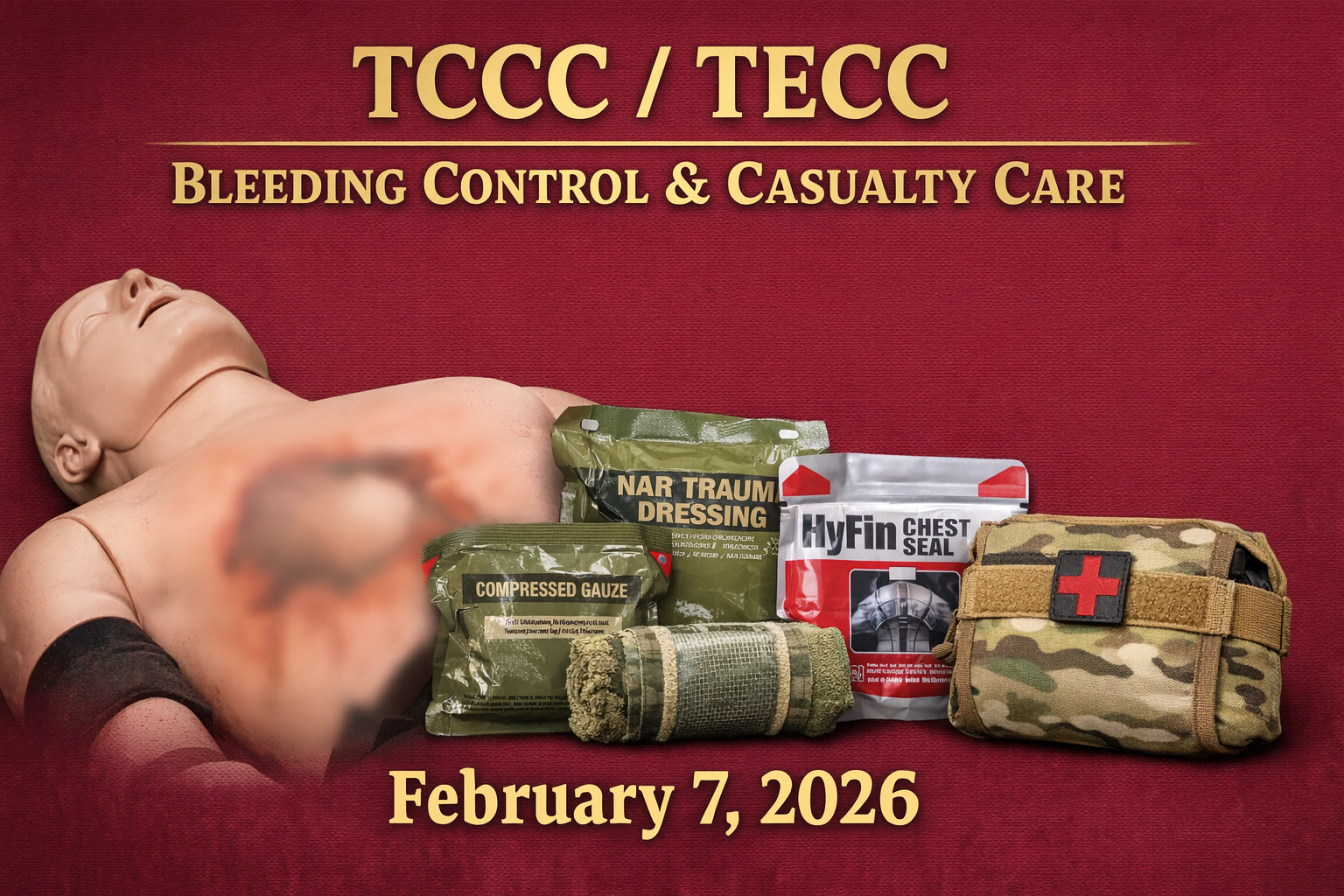
Over 8–10 hours you’ll work with North American Rescue (NAR) supplies—including NAR trauma dressings, HyFin chest seals, and compressed gauze for wound packing—and run through realistic casualty scenarios that force you to think, move, and treat under stress.
This is not a checkbox CPR class. Expect to be on the ground, applying pressure, packing wounds, and working problems as a team.
What You’ll Learn
By the end of the course, you will be able to:
Apply the MARCH algorithm to identify and treat life-threatening injuries
Control massive bleeding using direct pressure, wound packing, and pressure dressings
Properly apply tourniquets on yourself and others (one-hand and two-hand applications)
Recognize chest injuries and apply chest seals
Manage airway and breathing
Identify safe vs unsafe zones (Direct Threat, Indirect Threat, Evacuation/Cold zone)
Integrateuse of cover/concealment, and communication with 911 into your medical response
Prevent shock and manage casualties until higher care arrives
Build, stage, and effectively use an IFAK / trauma kit on your person, in your vehicle, or on your kit
Course Content
TCCC/TECC mindset: care under fire vs. tactical field care
MARCH-E breakdown and practical application
Hemorrhage control:
Tourniquets (selection, application, common mistakes)
Wound packing
Building and applying trauma dressings
Chest trauma:
Indications for vented chest seals
Hands-on reps with chest seals
Casualty movement and simple improvised carries
Building personal and vehicle trauma kits
Basic legal / ethical considerations for bystander care
Gear & Materials Provided
All training materials are provided, including:
NAR trauma dressings
HyFin chest seals
Compressed gauze for wound-packing practice
Training aids, mannequins/simulators, fake blood, tape, and gloves for scenarios
Some courses may offer discounted trauma kits and gear available for purchase at the end of class.
Who This Course Is For
Concealed carriers and home-defense focused gun owners
Law enforcement and military personnel
Firearms instructors and range safety officers
Security teams, church safety teams, and protective details
Outdoor professionals and anyone who works in remote environments
No prior medical training is required. We start from fundamentals and build up through hands-on reps and scenarios.
What to Bring
Requirements:
Age 21+ (or with parent/guardian consent)
Able to kneel, move, and assist in lifting/moving a simulated casualty
Willingness to learn!
Recommended to Bring:
Clothing you don’t mind getting dirty (fake blood, sweat, etc.)
Sturdy shoes or boots
Gun belt, plate carrier, or kit (Optional)
Pistol w/ holster (Optional)
Any IFAK/trauma kit you currently use (we’ll review and optimize it)
Water (at least 2L), snacks, and lunch
I recommend Blue Force Gear’s IFAKs.
*Note: This is a non-certification training course. Completion of this class does not grant a medical license, certification, or authorization to practice medicine. Students are expected to operate within the laws and scope of practice that apply in their jurisdiction.
When violence or serious injury happens, the person who stops the bleeding is the first responder. And often, you are your own first response. The Adamas Tactical Trauma Course is a one-day, hands-on class built around TECC/TCCC principles and tailored for responsible citizens, law enforcement, and military who want to be as confident with medical lifesaving gear.
Over 8–10 hours you’ll work with North American Rescue (NAR) supplies—including NAR trauma dressings, HyFin chest seals, and compressed gauze for wound packing—and run through realistic casualty scenarios that force you to think, move, and treat under stress.
This is not a checkbox CPR class. Expect to be on the ground, applying pressure, packing wounds, and working problems as a team.
What You’ll Learn
By the end of the course, you will be able to:
Apply the MARCH algorithm to identify and treat life-threatening injuries
Control massive bleeding using direct pressure, wound packing, and pressure dressings
Properly apply tourniquets on yourself and others (one-hand and two-hand applications)
Recognize chest injuries and apply chest seals
Manage airway and breathing
Identify safe vs unsafe zones (Direct Threat, Indirect Threat, Evacuation/Cold zone)
Integrateuse of cover/concealment, and communication with 911 into your medical response
Prevent shock and manage casualties until higher care arrives
Build, stage, and effectively use an IFAK / trauma kit on your person, in your vehicle, or on your kit
Course Content
TCCC/TECC mindset: care under fire vs. tactical field care
MARCH-E breakdown and practical application
Hemorrhage control:
Tourniquets (selection, application, common mistakes)
Wound packing
Building and applying trauma dressings
Chest trauma:
Indications for vented chest seals
Hands-on reps with chest seals
Casualty movement and simple improvised carries
Building personal and vehicle trauma kits
Basic legal / ethical considerations for bystander care
Gear & Materials Provided
All training materials are provided, including:
NAR trauma dressings
HyFin chest seals
Compressed gauze for wound-packing practice
Training aids, mannequins/simulators, fake blood, tape, and gloves for scenarios
Some courses may offer discounted trauma kits and gear available for purchase at the end of class.
Who This Course Is For
Concealed carriers and home-defense focused gun owners
Law enforcement and military personnel
Firearms instructors and range safety officers
Security teams, church safety teams, and protective details
Outdoor professionals and anyone who works in remote environments
No prior medical training is required. We start from fundamentals and build up through hands-on reps and scenarios.
What to Bring
Requirements:
Age 21+ (or with parent/guardian consent)
Able to kneel, move, and assist in lifting/moving a simulated casualty
Willingness to learn!
Recommended to Bring:
Clothing you don’t mind getting dirty (fake blood, sweat, etc.)
Sturdy shoes or boots
Gun belt, plate carrier, or kit (Optional)
Pistol w/ holster (Optional)
Any IFAK/trauma kit you currently use (we’ll review and optimize it)
Water (at least 2L), snacks, and lunch
I recommend Blue Force Gear’s IFAKs.
*Note: This is a non-certification training course. Completion of this class does not grant a medical license, certification, or authorization to practice medicine. Students are expected to operate within the laws and scope of practice that apply in their jurisdiction.